





Digital India was launched by the Prime Minister of India Shri. Narendra Modi on 2 July 2015 - with an objective of connecting rural areas with high-speed Internet networks and improving digital literacy.[1][2][3] The vision of Digital India programme is inclusive growth in areas of electronic services, products, manufacturing and job opportunities etc. and it is centred on three key areas – Digital Infrastructure as a Utility to Every Citizen, Governance & Services on Demand and Digital Empowerment of Citizens.[4][3] The Government of India entity Bharat Broadband Network Limited which executes the National Optical Fibre Network project will be the custodian of Digital India (DI) project.[5][6] BBNL had ordered United Telecoms Limited to connect 250,000 villages through GPON to ensure FTTH based broadband. This will provide the first basic setup to achieve towards Digital India and is expected to be completed by 2017. The government is planning to create 28,000 seats of BPOs in various states and set up at least one Common Service Centre in each of the gram panchayats in the state.[7] The 2016 Union budget of India announced 11 technology initiatives including the use data analytics to nab tax evaders, creating a substantial opportunity for IT companies to build out the systems that will be required.[8] Digital Literacy mission will cover six crore rural households.[8] It is planned to connect 550 farmer markets in the country through the use of technology.[9]
The Central Govt. Health Scheme in India is comprehensive health care to the CGHS Beneficiaries. The Central Govt. Health Scheme is applicable to the following categories of people residing in CGHS covered cities: v All Central Govt. Servants paid from Civil Estimates (other than those employed in v Railway Services and those employed under Delhi Administration except members v of Delhi Police Force). v Pensioners drawing pension from Civil Estimates and their family members – (Pensioner residing in non- CGHS areas also may obtain CGHS Card from nearest CGHS covered City) v Hon'ble Members of Parliament v Hon'ble Judges of Supreme Court of India The dispensary is the backbone of the Scheme. Instructions on these various matters have been issued from. time to time for the guidance of the specialists and medical Officers. With the rapid and continuous expansion of the Scheme, however, not only situation has changed and problems arisen but also. the rapidly expanding staff have not approved practices, procedures and instructions in regard to their various duties and responsibilities. In the following paragraphs is set out the gist of provisions of the Scheme, various instructions and order issued from time to time to serve as a Compendium for the guidance of the CGHS staff.
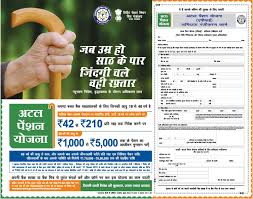
In Atal Pension Yojana, for every contribution made to the pension fund, The Central Government would also co-contribute 50% of the total contribution or ?1,000 (US$15) per annum, whichever is lower, to each eligible subscriber account, for a period of 5 years. The minimum age of joining APY is 18 years and maximum age is 40 years. The age of exit and start of pension would be 60 years. Therefore, minimum period of contribution by the subscriber under APY would be 20 years or more. Aadhaar would be the primary KYC document for identification of beneficiaries, spouse and nominees to avoid pension rights and entitlement related disputes in the long-term. The subscribers are required to opt for a monthly pension from Rs. 1000 – Rs. 5000 and ensure payment of stipulated monthly contribution regularly. The subscribers can opt to decrease or increase pension amount during the course of accumulation phase, as per the available monthly pension amounts. However, the switching option shall be provided once in year during the month of April. This scheme will be linked to the bank accounts opened under the Pradhan Mantri Jan Dhan Yojana scheme and the contributions will be deducted automatically. Most of these accounts had zero balance initially. The government aims to reduce the number of such zero balance accounts by using this and related schemes.[3]